NARRATIVE/SYSTEMATIC REVIEWS/META-ANALYSIS
Design and Development of a Blockchain-Based System to Protect Medical Records
Subhash G. Rathod, PhD  , Pradhyuman Omkar Patel, BE, BTech , Vaibhav Suresh Bhirud, BE, BTech , Ved Prasad Dodwadkar, BE, BTech and Sanket Dhananjay Kokadwar, BE, BTech
Department of Computer Engineering, Marathwada Mitra Mandal’s Institute of Technology, Pune, India
Keywords: Authentication, authorization, BlockCare, data integrity, digital signatures, health informatics
Abstract
The “BlockCare” addresses the growing challenge of managing and accessing personal health records scattered across various healthcare providers. Patients often struggle with fragmented and inaccessible health information, leading to delays and potential errors in their care.1,2 We have expanded the system’s technical architecture to ensure interoperability and compliance with global healthcare regulations. BlockCare offers a secure, centralized platform where users can store, manage, and easily access their complete health data, including medical history, lab results, and treatment records.3,4 Detailed security mechanisms such as cryptographic hashing, multi-signature authentication, and a decentralized access control model have been incorporated.5 Utilizing advanced encryption and robust authentication methods, the app ensures the highest level of data privacy and security.6,7 It integrates seamlessly with different healthcare systems, providing real-time updates and allowing users to share their information effortlessly with healthcare professionals.8 The intuitive interface simplifies the process of retrieving and managing health records, empowering patients to make informed decisions about their care and improving overall care coordination.9,10 The manuscript now discusses compliance with Health Insurance Portability and Accountability and General Data Protection Regulation, ensuring legal and ethical handling of sensitive health data.11 Countries like Greece, where comprehensive regulatory frameworks for electronic health record (her) adoption are still emerging, could greatly benefit from decentralized health record solutions like BlockCare.
Citation: Blockchain in Healthcare Today 2025, 8: 381.
DOI: https://doi.org/10.30953/bhty.v8.381
Copyright: © 2026 The Authors. This is an open-access article distributed in accordance with the Creative Commons Attribution Non-Commercial (CC BY-NC 4.0) license, which permits others to distribute, adapt, enhance this work non-commercially, and license their derivative works on different terms, provided the original work is properly cited and the use is non-commercial. See http://creativecommons.org/licenses/by-nc/4.0. The authors of this article own the copyright.
Submitted: February 4, 2025; Accepted: June 2, 2025; Published: April 30, 2026
Funding: The authors declare no conflicts of interest, financial or otherwise, related to this work.
This research did not receive any specific grant from funding agencies in the public, commercial, or not-for-profit sectors.
Corresponding Author: Ved Prasad Dodwadkar, E-mail: Vedd0623@gmail.com
BlockCare addresses the pervasive issue of fragmented personal health records by offering a secure, centralized platform designed for comprehensive health data management and access.12 This version expands on the blockchain consensus mechanism used—Proof of Authority—to ensure high efficiency while maintaining data integrity. By consolidating vital components such as medical history, laboratory results, imaging studies, and treatment records into one cohesive location, BlockCare empowers users to take charge of their health information.
Its commitment to privacy and security is an example of the standout features of BlockCare. The platform employs advanced encryption protocols, decentralized storage mechanisms, and smart contract-based authentication, ensuring that sensitive health data remain protected against unauthorized access. This level of security is crucial in maintaining user trust, particularly as concerns about data breaches in healthcare continue to rise.13
Integration is another key aspect of the functionality of BlockCare. The app seamlessly connects with various healthcare systems and providers, enabling real-time updates and facilitating easy sharing of information with healthcare professionals.14,15 This interoperability is achieved through standardized Application Programming Interfaces (APIs), including Fast Healthcare Interoperability Resources [FHIR] and Health Level Seven [HL7], ensuring compliance with global health data standards.16,17 BlockCare’s user-friendly interface simplifies the often complex process of record management. Patients can easily navigate the platform to upload documents, track vaccinations, manage prescriptions, and view test results—all in one place. This accessibility enhances the patient experience and encourages individuals to engage more actively in their healthcare journey. Moreover, BlockCare is designed to empower patients by providing them with tools and resources to make informed health decisions. Users can set health goals, monitor progress, and access educational materials tailored to their specific needs.6 This proactive approach fosters a sense of ownership over one’s health, which is linked to improved outcomes and greater patient satisfaction.
Ultimately, BlockCare aims to enhance patient outcomes and streamline healthcare management by bridging the gaps in health information. By providing a centralized, secure platform for managing health data, it improves care coordination and supports a more patient-centric approach to healthcare. As the landscape of healthcare continues to evolve, platforms like BlockCare are essential in ensuring that individuals have the resources they need to navigate their health effectively.
Objectives
The objectives for this report are listed in Table 1.
Motivation
In today’s complex healthcare landscape, patients often face significant challenges due to fragmented health records scattered across various healthcare providers, specialists, and facilities. This disjointed system can lead to delays in care, increased medical errors, and a lack of comprehensive understanding of a patient’s health history. As a result, healthcare professionals might not have access to complete information when making critical decisions, which can negatively impact patient outcomes.
BlockCare aims to address these challenges by providing a secure, centralized platform for patients to manage and access their complete health data. Our vision is to empower patients with the tools they need to take charge of their health by facilitating seamless communication between various healthcare stakeholders.18 By consolidating records from different providers, we aim to eliminate the silos of information that often hinder effective care coordination.
Our goal is to simplify record management by offering a user-friendly interface that allows patients to easily upload, organize, and retrieve their health information. This centralized access will improve the accuracy of medical records and enhance the efficiency of care delivery. With a comprehensive view of their health data, patients will be better equipped to engage in informed discussions with their healthcare providers, leading to more personalized and effective treatment plans.19
Moreover, by streamlining health record management, BlockCare can contribute to better overall healthcare coordination. Our platform facilitates data sharing among providers, ensuring that everyone involved in a patient’s care has access to the necessary information. This holistic approach can reduce duplication of tests, minimize the risk of adverse drug interactions, and ultimately lead to improved health outcomes.
In summary, BlockCare seeks to revolutionize the way patients manage their health information by providing a secure, accessible, and centralized platform.20 By enhancing record management and fostering better communication among healthcare providers, we aim to improve individual patient experiences and drive positive changes in the healthcare system.
Literature Survey
This article emphasizes the importance of understanding user needs and the role of innovations, such as gamification and wearable technology, in increasing user engagement and awareness of health issues. Additionally, it touches on the use of structured and unstructured data, the potential of blockchain technology for security, and the necessity for ongoing research to address existing disadvantages, such as data privacy concerns and system accessibility in developing countries. As noted in Greece, where a lack of centralized electronic health record (EHR) infrastructure and readmission policies persists, there remains a critical need for systems like BlockCare that offer secure, interoperable, and patient-centric data management.
Overall, the introduction sets the stage for a detailed exploration of EHR systems, their innovations, and their impact on healthcare delivery.3 The goal of the incentives is to improve the quality, efficiency, and cost-effectiveness of healthcare delivery to Medicare/Medicaid patients. The programs “provide incentive payments to eligible professionals, eligible hospitals, and critical access hospitals as they adopt, implement, upgrade, or demonstrate meaningful use of certified EHR technology.”1
Healthcare providers who treat Medicare/Medicaid patients face penalties—in the form of reduced payments for services—if they fail to comply with meaningful use requirements.5 This report focuses on predicting early readmission risk, defined as readmission within 30 days of discharge. Reducing such rates can improve cost efficiency by avoiding additional medical and administrative costs.
Although Greece currently lacks a regulatory framework for patient readmissions and centralized EHRs, this gap highlights the urgent need for secure and interoperable health data systems. BlockCare addresses this by offering a decentralized solution that could serve as a model for countries like Greece, aiming to modernize their healthcare infrastructure.6 Potential benefits include increased preventive care, easier chronic disease management, evidence-based clinical guidelines, and rapid remote access to patient information. The EHRs contribute to improved job satisfaction by reducing repetitive tasks and administrative burdens. Data entry options such as voice recognition, templates, and handwriting recognition help optimize the system’s usability.7 The literature survey in this article reviews various studies and advancements in the field of EHRs and cloud computing within healthcare systems. It highlights the slow adoption of EHRs due to challenges, including high cost, data security concerns, and the reliance on traditional paper-based methodologies,10 frameworks, and methodologies for managing EHRs and medical data. It highlights the importance of data interoperability and the use of crowdsourcing for efficient data analysis in healthcare systems.9 The EHR landscape focuses on security, privacy, data mining, and user acceptance. It highlights the exponential growth in related publications over the past 3 years, indicating rapid advancements in EHR technology.8
The integration of blockchain technology in EHRs highlights its potential for enhancing data security, privacy, and decentralized management. It discusses existing research, challenges, and opportunities for improving healthcare information systems through innovative solutions.4 It explores a blockchain-based EHR framework using smart contracts to address issues in medical data sharing, security, and accessibility. It proposes a system involving all stakeholders for secure, interoperable health data management in healthcare.2 EHR systems, combined with predictive analytics, data mining, and machine learning, are increasingly being used in healthcare to improve data quality, enable advanced analytics, support predictive modeling, and deploy intelligent clinical decision-support systems.
Methodology
Existing Methodology
Currently, the management and access to personal health records are fragmented across different healthcare systems, creating significant challenges for both patients and providers. The lack of a unified, immutable ledger results in inefficiencies, redundant testing, and increased medical errors. Health records are typically stored in separate systems, or silos, by individual healthcare providers such as hospitals, clinics, and labs, making it difficult to have a comprehensive view of a patient’s medical history.21,22
Patients often need to request their records manually from each provider, which is time-consuming and can result in incomplete or delayed information. Additionally, there is limited interoperability between EHR systems, meaning data cannot be transferred easily from one provider to another. This lack of integration leads to inefficiencies, such as redundant testing, inaccurate diagnoses, and poor communication between providers.
Some healthcare institutions offer patient portals where individuals can access specific health records, such as laboratory results or prescriptions, but these portals are typically limited to one provider’s system.23 As a result, patients may have to juggle multiple logins and interfaces to access different parts of their medical history. Privacy and security concerns also arise with current systems, as ensuring the secure exchange of health data while complying with regulations like the Health Insurance Portability and Accountability Act (HIPPA) or the General Data Protection Regulation (GDPR) is a complex challenge. Unauthorized access, data breaches, and the lack of secure sharing methods further complicate the existing health data management landscape. Existing EHR systems often operate as centralized databases controlled by individual institutions or providers. While they store patient data, they lack seamless integration with other systems. This fragmented landscape complicates data sharing, necessitating manual retrieval from various providers, which is time-consuming and prone to error. Furthermore, privacy and security concerns persist due to the centralized nature of these systems, making them susceptible to breaches and unauthorized access.24
Proposed Methodology
To overcome these challenges, the proposed solution is BlockCare, a secure, decentralized platform designed to consolidate personal health records from various providers into one accessible location. This platform will integrate with healthcare systems using standard APIs (such as FHIR and HL7) to ensure real-time updates and seamless synchronization of patient records across hospitals, clinics, labs, and other healthcare entities. By providing a unified repository of medical history, laboratory results, prescriptions, and treatment plans, BlockCare will offer patients and providers a complete view of health data, thus improving care coordination and reducing redundancies in the healthcare process.25 BlockCare will prioritize security, using advanced encryption to protect data both in transit and at rest, while also implementing multifactor authentication and role-based access controls to ensure only authorized users can access sensitive information.26 It will comply with regulations such as HIPAA and GDPR to maintain the highest standards of data privacy. The platform’s user-friendly interface will empower patients by simplifying the management of their health records, allowing them to upload personal data, track health trends, and share information with healthcare professionals securely.
Data flow within the BlockCare system is designed to be seamless and efficient. When a patient uploads their health data, such as medical history, test results, or prescriptions, they are stored securely on the Interplanetary File System (IPFS). Each upload is linked to the Ethereum blockchain, where transaction details, such as time, date, and participants, are recorded.
Healthcare providers wishing to access a patient’s record must request access, which is governed by the smart contract system. Once granted, healthcare providers can securely retrieve the patient’s health information from IPFS, ensuring that it is accurate and up-to-date. BlockCare’s architecture also supports interoperability with existing healthcare systems.27,28 By using standard protocols such as FHIR and HL7, the system allows for the exchange of health data across different institutions, ensuring that no data silos remain. This interoperability facilitates a smoother exchange of information, improving care coordination and ensuring that healthcare providers have access to the most current data.
In addition to these features, BlockCare prioritizes scalability and flexibility. The platform is designed to grow with the needs of the healthcare sector, allowing for the addition of more healthcare providers, data sources, and users over time.29 As the healthcare industry continues to evolve, the modular design of BlockCare ensures that the system can be easily adapted or expanded to meet new requirements without compromising security or data integrity. The decentralized nature of the system, combined with blockchain technology, guarantees that as the platform scales, it remains secure and efficient.30 By utilizing blockchain technology and decentralized storage, the system ensures that health data remain secure, transparent, and easily accessible. BlockCare’s architecture consists of several key components, each designed to meet the specific needs of healthcare data management.
At the core of BlockCare’s architecture is the blockchain layer, which uses Ethereum to ensure decentralized access control and data validation.31 This layer guarantees that all transactions related to patient health records, such as updates or access requests, are recorded immutably on the blockchain, providing a transparent and auditable history of each patient’s medical data.27 The blockchain ensures that once a transaction is recorded, it cannot be altered, which guarantees data integrity. The system also incorporates a smart contract layer, which automates functions like consent management, data sharing permissions, and authorization requests. These smart contracts ensure that health data are only accessible to authorized individuals, with patients having full control over who can access their information.28
The block diagram (Figure 1) represents a blockchain-based EHR management system that ensures secure, decentralized, and privacy-compliant medical data storage and sharing. It consists of multiple interconnected layers. The Input Layer includes stakeholders such as patients, doctors, and diagnostic centers who interact with the system to access and manage health records. The Middle Layer facilitates authentication and secure access through a web application (ReactJS UI) and MetaMask, which handles blockchain transactions. Data are stored in the IPFS, enabling decentralized file storage and retrieval for efficient medical record management.32 The blockchain Layer utilizes the Ethereum blockchain for access control, data sharing, and validation through smart contracts, ensuring security and immutability of health records.33 The Security & Compliance Layer enforces HIPAA and GDPR compliance, ensuring adherence to data privacy regulations and continuous monitoring of sensitive health information.34 By integrating blockchain and IPFS, the system enhances interoperability, security, & transparency in EHR management while maintaining regulatory compliance & user accessibility.
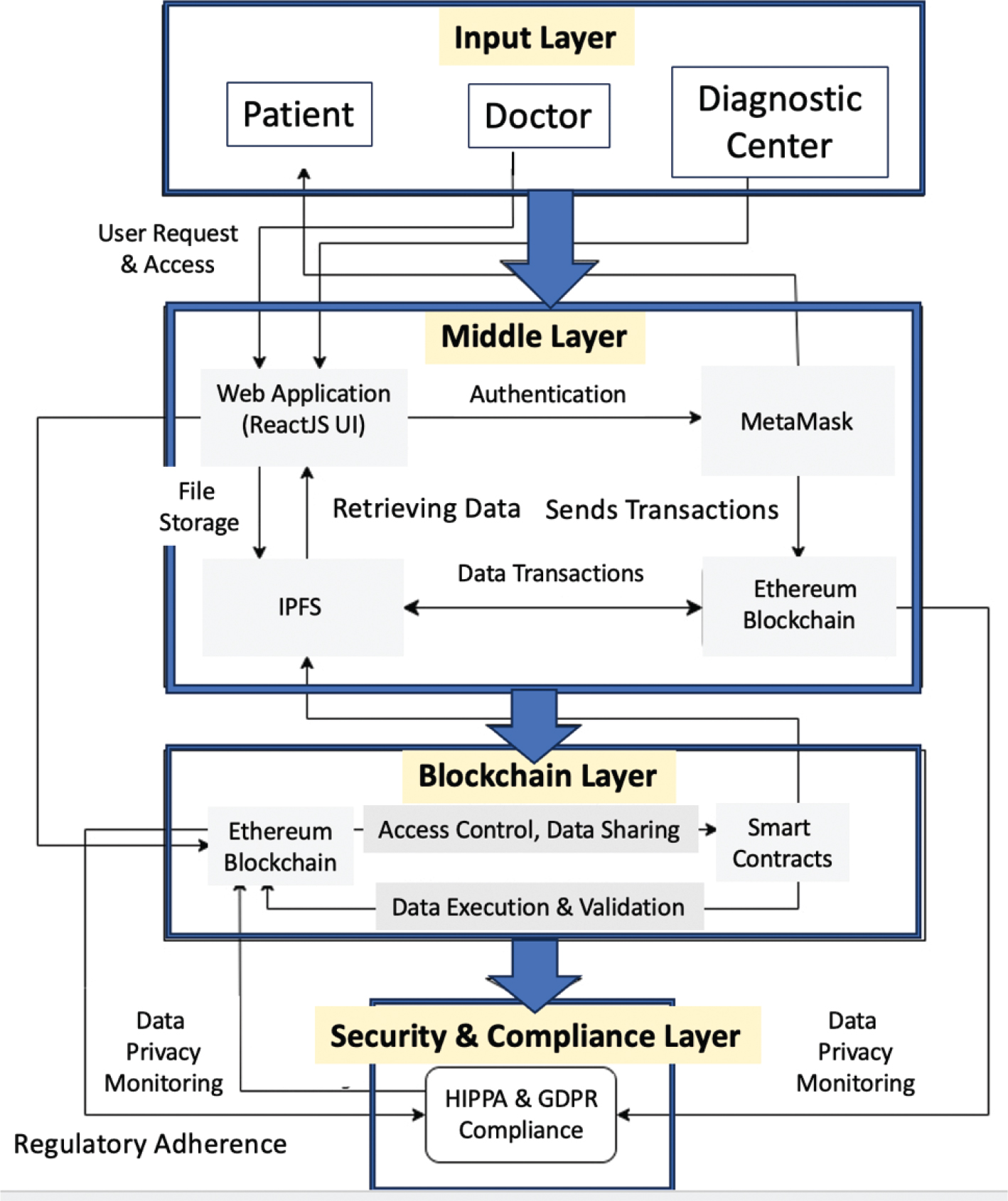
Fig. 1. Block diagram for the BlockCare system.36 GDPR: General Data Protection Regulation; HIPPA: Health Insurance Portability and Accountability Act; IPFS: interplanetary file system.
The data demonstrate the feasibility and efficiency of our blockchain-based solution in real-world scenarios.
The proposed BlockCare model outperforms both traditional EHR systems and existing blockchain-based solutions by optimizing security, interoperability, and efficiency. It also ensures compliance with healthcare regulations without compromising blockchain immutability (Table 2).35
Results
The BlockCare project successfully implemented a blockchain-based system for managing digital health records, addressing several key challenges in data security, privacy, and accessibility. The integration of blockchain technology ensured that all health records were stored in an immutable and tamper-proof manner, significantly enhancing data integrity. This decentralized approach eliminated the risks associated with central databases, such as unauthorized alterations or data breaches, providing a transparent and secure environment for health record management. Moreover, the system empowered patients by offering them full control over their health data through smart contracts (Table 3).
Patients could easily manage who had access to their records, granting or revoking permissions in real time.37 This ensured that privacy was maintained, as only authorized healthcare providers could access the data, addressing privacy concerns that are prevalent in traditional health record systems.
The project also facilitated seamless data sharing among healthcare providers. With blockchain-enabled consent management, the sharing process was streamlined, allowing hospitals and doctors to access up-to-date patient information securely and efficiently. This improved collaboration between healthcare institutions and resulted in more coordinated patient care. Finally, the system proved to be scalable and efficient, capable of handling a growing number of users and healthcare records. The modular design allowed for easy expansion and adaptability, making the system suitable for widespread use across healthcare institutions. Overall, the BlockCare project demonstrated the potential of blockchain technology to transform digital health record management, offering a secure, user- friendly, and scalable solution.38
Future Trends
Blockchain in healthcare is poised to bring transformative changes. As the technology continues to mature, its potential for improving data security, patient privacy, and interoperability will expand. One major trend is the increasing push for global interoperability, where blockchain enables seamless data exchange between healthcare systems across borders. This will eliminate data fragmentation, improving care coordination and efficiency. Additionally, decentralized models, such as Decentralized Autonomous Organizations, could reshape the way health data are managed, giving patients more control over their information, and how it is shared.
The tokenization of health data is another promising development, allowing patients to control and potentially monetize access to their medical records in a secure, transparent manner. Integrating blockchain with artificial intelligence will enhance data analysis, helping healthcare providers gain more in-depth insights while maintaining data security.39,40 Moreover, blockchain will play a crucial role in improving the transparency of pharmaceutical supply chains, helping to ensure the authenticity of drugs and reducing fraud. Finally, as concerns about privacy grow, blockchain will offer enhanced privacy solutions through better consent management, enabling patients to have more control over who accesses their data. These trends suggest a future where blockchain not only strengthens data security but also empowers patients and healthcare providers alike.
Conclusions
BlockCare significantly simplifies health record management by providing a secure, patient-centric, and regulation-compliant, centralized platform for patients, healthcare providers, and institutions. This system enhances data accessibility, ensuring that vital health information is readily available when needed, which leads to better coordination among healthcare providers. This level of accessibility promotes more informed decision-making, improved diagnoses, and more personalized treatment plans, ultimately contributing to enhanced patient care. One of the standout benefits of BlockCare is its ability to empower patients. By giving individuals control over their medical records, BlockCare encourages patients to actively engage in their healthcare journey. This engagement can foster better health outcomes through proactive management of chronic conditions, medication tracking, and timely updates to health records.
Additionally, BlockCare enhances emergency readiness. In critical situations, where time is of the essence, having immediate access to a patient’s health history, allergies, medications, and conditions can be lifesaving. Medical professionals can act quickly with confidence, knowing they have accurate information, which can make all the difference in emergency care. Despite these advantages, challenges remain. Integrating BlockCare with existing hospital systems and EHR platforms can be complex, often requiring extensive coordination between various IT teams. Additionally, user adoption, particularly among older populations or those less familiar with technology, can pose hurdles. Healthcare providers may also be slow to adopt the system due to the learning curve and the need for training.
Contributors
The authors contributed the following to the development of this article: Dr. Subhash G. Rathod, supervision, guidance, final review; Ved Prasad Dodwadkar, conceptualization, writing, system design; Pradhyuman Omkar Patel, development, implementation; Vaibhav Suresh Bhirud, literature review, draft review; Sanket Dhananjay Kokadwar: testing, results analysis. All authors reviewed and approved the final manuscript for submission.
Data Availability Statement (DAS), Data Sharing, Reproducibility, and Data Repositories
This study does not involve real-world patient data. All datasets used for testing the BlockCare system were synthetically generated for simulation purposes and are not publicly archived. However, the smart contract code, front-end implementation, and architecture diagrams are available from the authors upon reasonable request. No third-party data repositories were used. The experiments were conducted in a controlled environment using a private Ethereum test network and IPF. The methodology is fully described in the manuscript to enable reproducibility by other researchers.
Application of AI-Generated Text or Related Technology
AI tools such as Grammarly and ChatGPT were used for language refinement and formatting suggestions. No AI-generated content was submitted without review or verification by the authors.
Acknowledgments
We would like to thank our project mentor Dr. Subhash G. Rathod, HoD of the Department of Computer Engineering from MMIT, Pune, India, for their guidance and support throughout this work.
References
- Anandi V, Ramesh M. Descriptive and predictive analytics on electronic health records using machine learning. Second International Conference on Advances in Electrical, Computing, Communication and Sustainable Technologies (ICAECT), IEEE, 2022.
- Vardhini B, Dass SN, Sahana R, Chinnaiyan R. A blockchain based electronic medical health records framework using Smart Contracts. International Conference on Computer Communication and Informatics (ICCCI), IEEE, 2021.
- Thakur S, Gupta B, Mathur U, Bansal D. Electronic health record systems for enhanced medical care: a survey. Intelligent Systems for Communication, IoT and Security (ICISCoIS), IEEE, 2023.
- Mittal EM, Mittal M. An electronic health record management system based on blockchain technology. Fourth Industrial Revolution Based Technology and Practices (ICFIRTP), IEEE, 2022.
- Piliouras TC, Suss RJ, Yu PL. Digital imaging & electronic health record systems. IEEE Long Island Systems, Applications and Technology Conference (LISAT), IEEE, 2015.
- Pitoglou S, Koumpouros Y, Anastasiou A. Using electronic health records and machine learning to make medical-related predictions from non-medical data. International Conference on Machine Learning and Data Engineering (iCMLDE), IEEE, 2018.
- Azhagiri M, Amrita R, Aparna R, Jashmitha B. Secured electronic health record management system. International Conference on Communication and Electronics Systems (ICCES), IEEE, 2018.
- Grana M, Lackwoski K. Electronic health record: A review. IEEE International Conference on Bioinformatics and Biomedicine (BIBM), IEEE, 2015.
- Freeda RA, Abarna BA, Jahnavi K, Lavanya P. Electronic medical record management system using recommendation algorithm. International Conference on Intelligent Computing, Instrumentation and Control Technologies (ICICICT), IEEE, 2022.
- Lakshman PYS, Priya Kumar D, Ramesh N, Pranathi K. Medical records management using cloud technology. Electronics and Sustainable Communication Systems (ICESC), IEEE, 2021.
- Rani BV, Parmindersingh S. A survey on electronic health records (EHRS): challenges and solutions. International Conference on Computing Methodologies and Communication (ICCMC), IEEE, 2022.
- Shahnaz A, Qamar U, Khalid A. Using blockchain for electronic health records. IEEE J Magazines. 2019;7:147782–95. https://doi.org/10.1109/ACCESS.2019.2946373
- Zaghloul E, Li T, Ren J. Security and privacy of electronic health records: decentralized and hierarchical data sharing using smart contracts. International Conference on Computing, Networking and Communications (ICNC), IEEE, 2019.
- Caroprese L, Veltri P, Vocaturo E, Zumpano E. Deep learning techniques for electronic health record analysis. International Conference on Information, Intelligence, Systems and Applications (IISA), IEEE, 2018.
- Wu R, Ahn G-J, Hu H. Secure sharing of electronic health records in clouds. International Conference on Collaborative Computing: Networking, Applications and Worksharing (CollaborateCom), IEEE, 2012.
- Ulybyshev D, Bare C, Bellisario K, Kholodilo V, Northern B, Solanki A, et al. Protecting electronic health records in transit and at rest. Annual IEEE Symposium on Computer-Based Medical Systems, IEEE, 2020.
- Díaz Iturry M, Alves-Souza SN, Ito M. Data quality in health records: a literature review. Iberian Conference on Information Systems and Technologies (CISTI), IEEE, 2021.
- Zheng H, Zhou H. Design of a digital archive system for positive emotions of university students based on blockchain technology. Educational Innovation (ECEI), IEEE Eurasian Conference, IEEE, 2024.
- Deborah RN, Rajiv SA, Vinora A. Scrutinization and abstraction of unstructured electronic health records using natural language processing and deep learning. Contemporary Computing and Communications (InC4), IEEE, 2023.
- Maghraby A, Numan A, Al Mashi A, Aljuhani A, Almehdar R, Abdu N. Applied blockchain technology in Saudi Arabia electronic health records. International Conference on Computational Science and Computational Intelligence (CSCI), IEEE, 2021.
- Abdul Karim NS, Ahmad M. An overview of electronic health record (EHR) implementation framework and impact on health care organizations in Malaysia: A case study. IEEE International Conference on Management of Innovation and Technology, ICMIT, IEEE, 2010.
- Zhu H, Hou M. Research on an electronic medical record system based on the Internet. International Conference on Data Science and Business Analytics (ICDSBA), IEEE, 2018.
- Pethuraj M, Vatchala L, Gayathri S. Securing healthcare data: leveraging blockchain for electronic health records. 2024 International Conference on Electronic Systems and Intelligent Computing (ICESIC), IEEE, 2024.
- Saweros E, Song Y-T. Connecting personal health records together with EHR using tangle. ACIS International Conference on Software Engineering, Artificial Intelligence, Networking, and Parallel/Distributed Computing (SNPD), IEEE, 2019.
- Hombal U, Dayananda RB. A review on security and privacy preserving mechanisms of electronic health records in cloud. Asian Conference, IEEE, 2021.
- Mahdy MM. Semi-centralized blockchain based distributed system for secure and private sharing of electronic health records. International Conference on Computer, Control, Electrical, and Electronics Engineering (ICCCEEE), IEEE, 2020.
- Kandula GS, Asodekar DM, Reddy GS, Likhitha BS, Devi MS. A secure and privacy oriented implementation of electronic health records. 2024 International Conference on Electronics, Computing, Communication and Control Technology (ICECCC), IEEE, 2024.
- Misbhauddin M, AlAbdulatheam A, Aloufi M, Al-hajji H, AlGhuwainem A. MedAccess: a scalable architecture for blockchain-based health record management. International Conference on Computer & Information Science (ICCIS), IEEE, 2020.
- Hamela K, Shrivastava G, Umapathi P, Bankar JS, Chaudhary SD, Kisan R. Enhancing data security and privacy in electronic health records with blockchain technology. 2024 4th International Conference on Technological Advancements in Computational Sciences (ICTACS), IEEE, 2024.
- Jaybhaye S, Desai R, Choudhari G, Dashetwar I, Dagale P. HealthVault: a blockchain-based patient health records management system. 2024 IEEE 9th International Conference for Convergence in Technology (I2CT), IEEE, 2024.
- Agrawal H, Lukesh FC. Digital health data supervision using blockchain in Ethereum Testnet. Augmented Intelligence and Sustainable Systems (ICAISS), IEEE, 2023.
- Saratkar S, Langote M, Chaudhari A, Thute T, Raut R, Thakre G. Enhancing healthcare: incorporating blockchain into electronic health records. 2024 International Conference on Inventive Computation Technologies (ICICT), IEEE, 2024.
- Nagpal S, Aggarwal PK, Gupta K, Shalini , Jain P, Agarwal A. Medical record management system using blockchain technology. Artificial Intelligence in Education and Industry 4.0 (IDICAIEI), DMIHER International Conference, IEEE, 2023.
- Shaik ZH, Shaik AH, Shaik JH. Electronic health records (EHR) management in hospitals using blockchain technology. Electrical, Computer, Communications and Mechatronics Engineering (ICECCME), International Conference, 2023.
- Lopez VJ. White paper—identifying the difference between electronic health records and electronic medical records. Identifying the Difference Between Electronic Health Records and Electronic Medical Records, IEEE, 2025.
- Johri E, Singh A, Thadani U. HealthKard—a digital decentralized health identity and EHR repository. Advances in Science and Technology (ICAST), IEEE, 2023.
- Peddu LR, Mishra A, Padmaja ARL, Rekha G, Palanikumar S, Pongiannan RK. MediVault DApp: a electronic health record application using blockchain technology. 2025 International Conference on Machine Learning and Autonomous Systems (ICMLAS), IEEE, 2025.
- Ramesh JVN, Begum S, Khaydarova M, Mohapatra S, Mary SC, Saravanakumar R. Blockchain technology in securing e-health records: an intelligent approach to data privacy. 2025 International Conference on Intelligent Systems and Computational Networks (ICISCN), IEEE, 2025.
- Mohan DS, Bansal V, Kumar A. Fuzzy logic and fog computing in electronic health records data privacy: a comprehensive review. 2025 2nd International Conference on Computational Intelligence, Communication Technology and Networking (CICTN), IEEE, 2025.
- Reshma V, Mamilla R. Electronic health records in a blockchain. Is part of: Artificial Intelligence-Enabled blockchain Technology and Digital Twin for Smart Hospitals, IEEE, 2024.
Copyright Ownership: This is an open-access article distributed in accordance with the Creative Commons Attribution Non-Commercial (CC BY-NC 4.0) license, which permits others to distribute, adapt, enhance this work non-commercially, and license their derivative works on different terms, provided the original work is properly cited and the use is non-commercial. See http://creativecommons.org/licenses/by-nc/4.0. The authors of this article own the copyright.